Archive for Awc

On Jordan’s Bank

Luke 3: 2b-3 “…the word of God came to John the son of Zechari’ah in the wilderness; and he went into all the region about the Jordan, preaching a baptism of repentance for the forgiveness of sins.”


Katja Linder plays Martin Gaskell’s chorale prelude on “Winchester New,” the tune of the English hymn “On Jordan’s Bank the Baptist’s Cry.”  Recorded at First Cumberland Presbyterian, Austin, Texas.

On Jordan’s bank the Baptist’s cry
Announces that the Lord is nigh;
Come, then, and hearken, for he brings
Glad tidings from the King of kings.

Then cleansed be every Christian breast
And furnished for so great a Guest.
Yea, let us each our hearts prepare
For Christ to come and enter there….

All praise, eternal Son, to Thee
Who advent sets Thy people free,
Whom, with the Father, we adore
And Holy Ghost forevermore.

lyrics from The Lutheran Hymnal, Hymn #63


Getting ready: Come Thou Long Expected Jesus

And now for something a little different as we move through Advent…

This is a classic YouTube video. A guy sits on his bed, says a few introductory words, and plays a song on his guitar.  You can find a lot of these, and a lot of them are pretty interesting, but this one I wanted to share. I like the way Johnnybluelabel noted in the caption that he was playing a 1996 Lowden O10 guitar. (I always look at the headstock to see what kind of guitar people play.) And his voice and the arrangement of this hymn remind me of Bruce Cockburn–whose album “Christmas” I have enjoyed for many years.  But most of all I think I like this video because it is unpolished. Just something to help the bass player get ready for Sunday.  Maybe it will help us get ready, too.


Covenant Prayer

The Covenant Prayer of John Wesley

I am no longer my own, but thine.
Put me to what thou wilt, rank me with whom thou wilt.
Put me to doing, put me to suffering.
Let me be employed for thee or laid aside for thee,
exalted for thee or brought low for thee.
Let me be full, let me be empty.
Let me have all things, let me have nothing.
I freely and heartily yield all things to thy pleasure and disposal.
And now, O glorious and blessed God, Father, Son and Holy Spirit,
thou art mine, and I am thine.
So be it.
And the covenant which I have made on earth,
let it be ratified in heaven.
Amen.


The Covenant Prayer was adapted by John Wesley for use in services for the Renewal of the Believer’s Covenant with God.  While early Covenant Renewal services could be held in any season, now they are often celebrated at the beginning of the new year.

I find these words both beautiful and terrifying.  If you take them seriously, they represent an amazing surrender of will which most of us find difficult to imagine, let alone desire.  If God takes them seriously, then by speaking them we do something huge and irrevocable, and we must do it “freely and heartily.”

Yet the words of the Covenant Prayer are not words of defeat or despair; they are not words of subjugation. They are words of Love. The prayer that begins, “I am no longer my own, but thine” moves from the offering of self, whatever the requirements, to include this startling claim on God, “Thou art mine and I am thine.”  The prayer articulates a covenant–a binding of ourselves to God and God to us.  How dare we give ourselves away?  How dare we make such a claim?

Cross and Flame


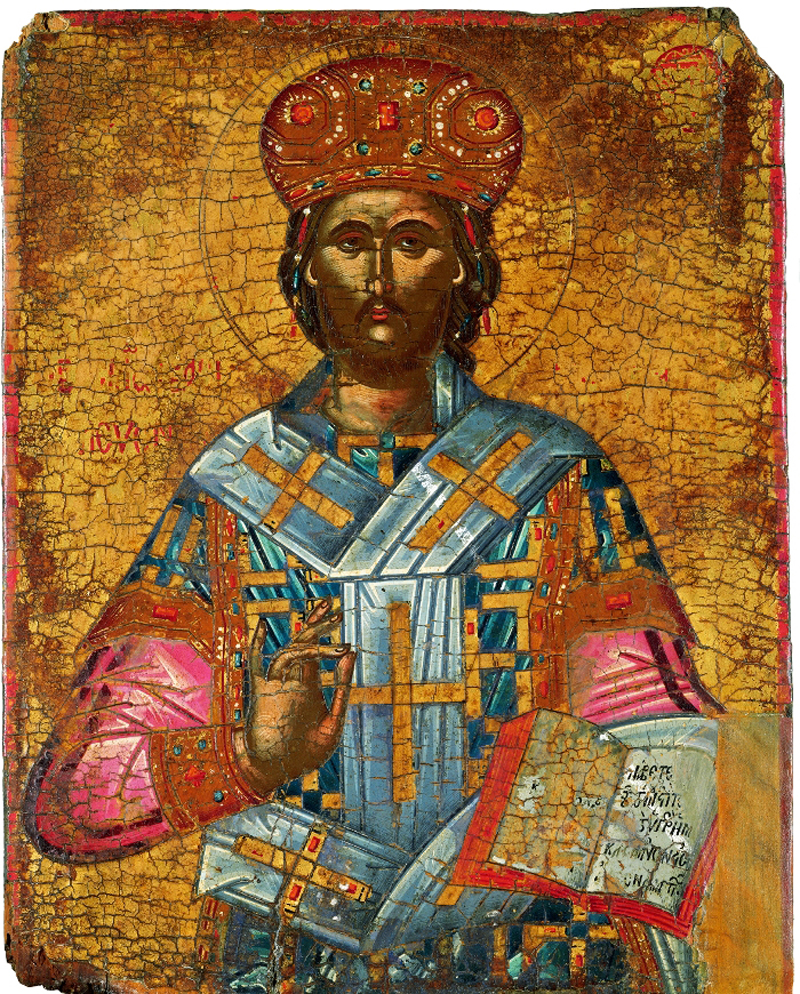
Christ the King

King of Kings, c.1600
Public domain via Wikimedia Commons

The feast of Christ the King is celebrated the last Sunday of the liturgical year by Anglicans, Catholics, and many mainline Protestant denominations. It seems like every denomination has some aspect of the faith that they express better than the others, and to my mind, you can’t beat the Anglicans and Episcopalians for understanding the idea of kingship in Christianity. A sense of majesty and sovereignty permeate the language, music, and architecture. With a little imagination, even we democratically-minded Americans can worship the King without wishing for our independence.

Here for Christ the King Sunday is St. Anne’s Cathedral, Belfast.  Presented by BBC Songs of Praise.


Digital Bishop – a call to action

On November 17, 2012, Nicholas Knisely was consecrated as the XII Bishop of Rhode Island. Kirk Smith, V Bishop of Arizona, preached this sermon at his consecration. The sermon issued a call to action for the Episcopal Church in a Digital Age, and said some things that the whole Church could stand to hear.  Read the entire sermon when you can, but meanwhile, here are some memorable passages:

Here are some are two scary facts—80% of people looking for a church to attend for the first time, go to the internet, and yet only 20% of Episcopal churches have an active and up-to-date website.  Here is another one.  There are 110 active bishops in this country, only six are on Twitter, and yet at our General Convention this summer, when we were discussing the blessings of same sex unions, over 10 million people worldwide were following us on Twitter!  File this under #majorfail….

It is to youth that the church must “cast its INTERnet.”   Internet communication is not a toy for young people—it is a way of life.  It is the language they speak, and if the church is going to grow, it will have to realize this….

“Be dressed for action and with your phones turned on!”  …thanks be to God!

Guidance, gratitude, and wonder


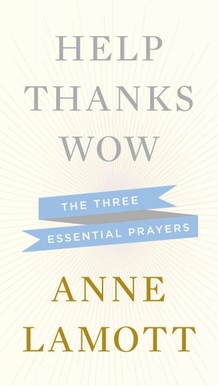
A lot of thought, and whole lot of ink have been shared on the subject of talking to God. MosesJesus and Paul can keep us going for hours. Today Anne Lamott talks about her new book on NPR, Help Thanks Wow: The Three Essential Prayers. Food for thought as we draw near to Thanksgiving.

Where are you from?

Psalm 87

…the LORD loves the gates of Zion more than all the dwelling places of Jacob. Glorious things are spoken of you, O city of God….The LORD records as he registers the peoples, “This one was born there.” 


If you grew up in the Church like I did, it’s difficult to read this psalm without hearing Haydn’s tune to “Glorious Things of Thee are Spoken” playing in the background.  In fact, sometimes the hymn plays so loudly in my head that it’s difficult to actually read the words–it all gets tangled up with John Newton’s poetry. This morning, however, I was able to quiet the music long enough to hear the refrain “This one was born there,” which appears three times in a brief seven verses.

“Where are you from?” I expect we’ve all been asked this at one time or another.  It’s a line we use to start a conversation, to get to know someone, and to try to establish some kind of connection.  It can be a way to identify something intriguing you’ve noticed–a curious accent, an ethnicity you can’t quite place, a distinction that you need to locate geographically. “Where are you from?”

“Oh, you must be from Texas!” While our place of origin may be a point of pride for us, it’s not always so for others. Think about the story of shibboleth, and Nathanael’s mocking, “Can anything good come out of Nazareth?”  In this psalm, however, it seems like everyone would want to be from Zion.

Zion is complicated in the Bible. It’s Jerusalem, it’s Solomon’s Temple, it’s the holy habitation, it’s the world to come. Zion, like Hollywood or Beijing, is a place that stands for an idea–in this case, an idea that as complicated as very the notion that there is a place where God dwells. Zion is the city of God and everything that can mean.

Amid all the complication, what we do know is that God loves Zion, and that love makes Zion glorious. Everyone who was born there shares in her glory. People from other places sit up and take note: “This one and that one were born in her.”  And they’re not the only ones.  The psalmist includes the curious and lovely image of the Lord writing in the heavenly census, “This one was born there.”

Like Joseph and Mary in the days of Caesar Augustus, God’s people know their house and lineage; and when the decree goes out, we will return to our city of origin, to Zion. For next to our names, there is a note: “This one was born there”  This is where we belong.  This is our beginning and our end. This is home.


“Glorious Things of Thee are Spoken” words: John Newton; tune: Kevin Twit


Lustily and with a good courage

Church music. Is there any other aspect of our worship with so much power to lift us to the company of heaven, or plunge us into the depths of petty squabbling?  We Christians are as passionate about music as we are about politics. Oh, the organist! Oh, the hymns! Oh, my tone-deaf neighbor!

I suspect that one reason for this passion is that we crave the blessings of good music: the experience of beauty, a sense of something greater than ourselves, a feeling of community, and  the opportunity for praise.  Our hunger is great, and we want worship to feed us with wonderful  music every time we make the effort and get ourselves to church.

The problem, of course, is that a worship service is not just about being fed. We come to praise, to give thanks, to learn, and I would argue, to create an experience in which our neighbor can do the same.  It’s not a show to watch. It’s not something the people “up front” do for us.  When we join in prayers, when we sing the hymns–even the ones we don’t know or don’t like–we make worship happen.  We do it for God and for ourselves and for others. And when we do it for others, our singing can be an act of hospitality.

The Wesley brothers knew a thing or two about the power of hymns. You can find John Wesley’s “Directions for Singing” in the preface to the Methodist Hymnal.  His instructions are plain, stern, and full of hope. He had such faith in what we could do if we sang with heart, soul, mind, and strength.  It makes me smile.  It makes me want to sing.


Directions for Singing

I. Learn these tunes before you learn any others; afterwards learn as many as you please.

II. Sing them exactly as they are printed here, without altering or mending them at all; and if you have learned to sing them otherwise, unlearn it as soon as you can.

III. Sing all. See that you join with the congregation as frequently as you can. Let not a single degree of weakness or weariness hinder you. If it is a cross to you, take it up, and you will find it a blessing.

IV. Sing lustily and with a good courage. Beware of singing as if you were half dead, or half asleep; but lift up your voice with strength. Be no more afraid of your voice now, nor more ashamed of its being heard, then when you sung the songs of Satan.

V. Sing modestly. Do not bawl, so as to be heard above or distinct from the rest of the congregation, that you may not destroy the harmony; but strive to unite your voices together, so as to make one clear melodious sound.

VI. Sing in time. Whatever time is sung be sure to keep with it. Do not run before nor stay behind it; but attend close to the leading voices, and move therewith as exactly as you can; and take care not to sing too slow. This drawling way naturally steals on all who are lazy; and it is high time to drive it out from us, and sing all our tunes just as quick as we did at first.

VII. Above all sing spiritually. Have an eye to God in every word you sing. Aim at pleasing him more than yourself, or any other creature. In order to do this attend strictly to the sense of what you sing, and see that your heart is not carried away with the sound, but offered to God continually; so shall your singing be such as the Lord will approve here, and reward you when he cometh in the clouds of heaven.


from John Wesley’s preface to Sacred Melody or a choice collection of psalm and hymn tunes, with a short introduction (1761)
Sorting


Flickr Photo courtesy Harleyannie


Good and evil we know in the field of this world grow up together almost inseparably; and the knowledge of good is so involved and interwoven with the knowledge of evil, and in so many cunning resemblances hardly to be discerned, that those confused seeds which were imposed upon Psyche as an incessant labour to cull out, and sort asunder, were not more intermixed. It was from out the rind of one apple tasted, that the knowledge of good and evil, as two twins cleaving together, leaped forth into the world. And perhaps this is that doom which Adam fell into of knowing good and evil, that is to say of knowing good by evil. As therefore the state of man now is; what wisdom can there be to choose, what continence to forbear without the knowledge of evil? He that can apprehend and consider vice with all her baits and seeming pleasures, and yet abstain, and yet distinguish, and yet prefer that which is truly better, he is the true warfaring Christian.

I cannot praise a fugitive and cloistered virtue, unexercised and unbreathed, that never sallies out and sees her adversary but slinks out of the race, where that immortal garland is to be run for, not without dust and heat.

–John Milton

An excerpt from John Milton’s Areopagitica, the first full-length treatise on freedom of the press, published 1644.


Taizé Community – Cantarei ao Senhor

The Taizé Community in France is an ecumenical monastic order of Protestants and Catholics–a “parable of community” that seeks to be a sign of reconciliation between divided Christians and between separated peoples. Taizé songs are intended to support personal prayer, and reveal to us a glimpse of heaven’s joy through the beauty of human voices.

The community is made up of about one hundred brothers. After a time of preparation, a new brother in the Taizé community will make his lifelong commitment. Here are a few of the words used to express this commitment:

…The Lord Christ, in his compassion and his love for you, has chosen you to be in the Church a sign of brotherly love. He calls you to live out, with your brothers, the parable of community.

So, renouncing from now on all thought of looking back, and joyful with boundless gratitude, never fear to run ahead of the dawn, to praise, and bless, and sing Christ your Lord.

Receive me, Lord Christ, and I shall live; may my hope be a source of joy.